From Boats to Real Estate: The Secret to Luxury Marketing Miami (2026 Playbook)
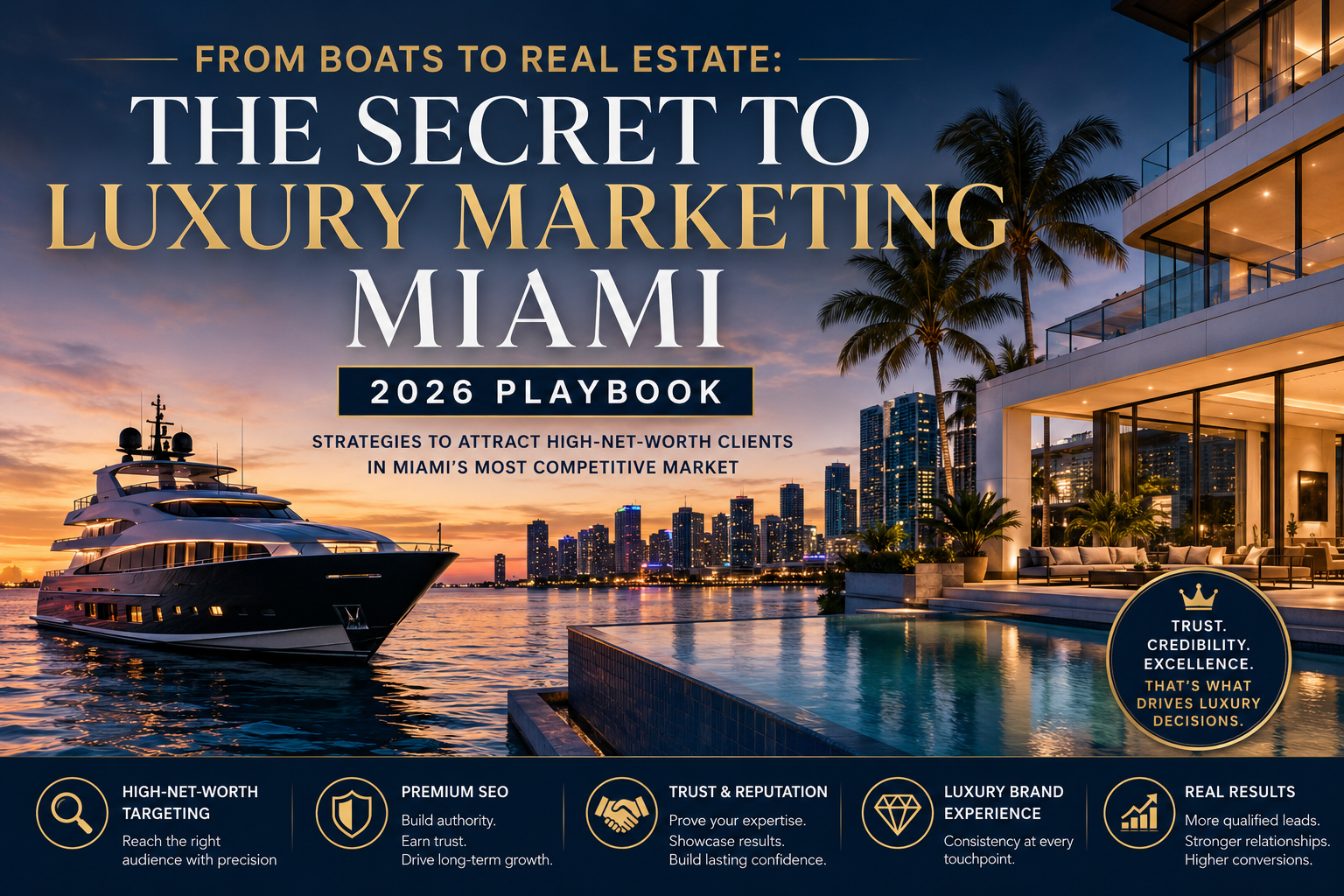
Miami has established itself as one of the world's most dynamic luxury markets. Beyond its iconic waterfront skyline and year-round lifestyle, the city has become a destination for entrepreneurs, investors, professional athletes, international buyers, and high-net-worth individuals seeking premium real estate, luxury experiences, and exclusive services.
From waterfront residences in Brickell and Miami Beach to superyachts along the Miami River and luxury retail in the Design District, affluent consumers have more choices than ever before. For brands, this creates tremendous opportunity, but it also raises the standard for how they market themselves.
Luxury buyers don't respond to marketing in the same way as mass-market consumers. They're making significant financial and lifestyle decisions, so they invest time in researching brands, comparing providers, and evaluating credibility long before making an enquiry.
Over the years, we've seen one pattern consistently across luxury industries: the brands that earn trust early are the ones that generate better-quality enquiries and build longer-lasting client relationships.
That's why successful Luxury Marketing Miami strategies aren't built around reaching the largest audience, they're built around reaching the right audience with the right message at the right stage of the buying journey.
Whether you're marketing luxury real estate, yacht brokerage services, hospitality, private aviation, wealth management, or another premium business, understanding how affluent buyers think is the foundation of sustainable growth.
Why Miami Has Become One of the World's Most Competitive Luxury Markets
Many cities have affluent neighbourhoods. Miami has developed an entire luxury ecosystem where multiple high-value industries operate side by side.
Someone relocating from New York, London, or São Paulo might purchase a condominium in Brickell, furnish a waterfront home in Miami Beach, charter a yacht for family holidays, join a private members' club, and begin working with local financial advisers, all within their first year of living in South Florida.
Because these purchasing decisions are closely connected, luxury brands are often competing for the attention of the same audience.
Miami's continued population growth, international investment, and global events, including Art Basel Miami Beach and the Miami International Boat Show, have only intensified competition. Affluent buyers are constantly exposed to premium brands, meaning businesses need more than attractive visuals or polished advertising to stand out.
In our experience, successful luxury brands differentiate themselves by demonstrating expertise before they ever attempt to sell. They educate, provide reassurance, and create a seamless brand experience that reflects the quality of the products or services they offer.
That shift, from promotion to positioning, is what separates effective luxury marketing from traditional marketing.
How Luxury Buyers Actually Make Decisions
One of the biggest misconceptions about luxury marketing is that wealthy consumers make quick purchasing decisions.
In reality, we've found the opposite to be true.
The higher the investment, the more carefully buyers evaluate their options.
Before contacting a luxury real estate brokerage, yacht company, or premium service provider, potential clients often spend weeks, or even months, researching the market. They compare websites, read reviews, explore social media, consume educational content, and seek recommendations from trusted advisers or personal networks.
Each interaction contributes to an overall impression of the brand.
We've frequently seen prospects visit a company's website multiple times before submitting an enquiry. Some first discover a brand through search, later return after seeing it mentioned elsewhere, and only make contact once they've developed confidence in the business.
This means every digital touchpoint matters.
A professional website, informative content, authentic client testimonials, consistent branding, and responsive communication all contribute to the buyer's decision-making process.
Luxury marketing isn't about convincing someone to buy immediately. It's about reducing uncertainty throughout the research journey until reaching out feels like the obvious next step.
What Luxury Real Estate and Yachting Can Teach Every Luxury Brand
At first glance, luxury real estate and yacht brokerage appear to have very little in common.
One revolves around property ownership. The other focuses on lifestyle and leisure.
Yet from a marketing perspective, both industries succeed for remarkably similar reasons.
Neither purchase is impulsive.
Both involve significant financial commitments, extended research periods, and buyers who expect expert guidance throughout the process.
More importantly, both rely heavily on confidence.
Whether someone is investing in a waterfront property overlooking Biscayne Bay or purchasing their first yacht, they aren't simply buying an asset, they're choosing a company they trust to guide them through a complex decision.
This is something we've observed across many premium industries.
The brands generating the strongest enquiries don't necessarily have the biggest advertising budgets. Instead, they consistently demonstrate expertise through valuable content, market knowledge, transparent communication, and a polished customer experience.
The products may differ, but the buying psychology remains remarkably consistent.
Luxury Real Estate
- Primary Buyer Priority: Lifestyle fit and investment confidence
- Marketing Focus: Local expertise, neighbourhood insights, and market knowledge
Yacht Brokerage
- Primary Buyer Priority: Ownership confidence
- Marketing Focus: Experience, expert guidance, and after-sales support
Private Aviation
- Primary Buyer Priority: Reliability and convenience
- Marketing Focus: Operational excellence and exceptional customer experience
Luxury Hospitality
- Primary Buyer Priority: Exceptional guest experiences
- Marketing Focus: Strong reputation, positive reviews, and consistent service quality
Wealth Management
- Primary Buyer Priority: Long-term confidence
- Marketing Focus: Expertise, transparency, and relationship building
Across each of these industries, marketing serves the same purpose: helping buyers feel informed and confident before making an important decision.
Why Reaching the Right Audience Matters More Than Reaching Everyone
One of the most common misconceptions in luxury marketing is that success comes from maximizing visibility. While brand awareness is important, it doesn't automatically translate into qualified enquiries or long-term clients.
Luxury brands operate in a very different environment from mass-market businesses. Their objective isn't to generate the highest number of clicks, it's to attract buyers who are genuinely interested, financially qualified, and ready to invest in premium products or services.
That's why precision consistently outperforms scale.
Rather than casting the widest possible net, successful luxury brands focus on understanding who their ideal customers are, where they spend their time, and what influences their purchasing decisions. A well-planned digital advertising strategy helps brands reach affluent audiences across search, display, and paid media while maintaining the premium positioning that luxury buyers expect.
In Miami, this audience is particularly diverse. It includes domestic buyers relocating from cities like New York and Chicago, international investors from Latin America and Europe, entrepreneurs establishing businesses in South Florida, seasonal residents, and affluent travellers seeking premium experiences.
Although these groups have different motivations, they all share one characteristic: they expect brands to understand their needs before making a sales pitch.
We've often found that brands achieve better results by narrowing their focus instead of broadening it. Speaking directly to a well-defined audience creates stronger engagement than trying to appeal to everyone.
For luxury businesses, relevance is far more valuable than reach.
Why Premium SEO Has Become a Competitive Advantage
The way affluent buyers research businesses has evolved significantly over the past few years.
Even when someone receives a personal recommendation, their next step is usually to search online.
They want to understand who they're dealing with before initiating a conversation.
This is why search visibility has become an essential part of luxury marketing, not simply because it generates traffic, but because it helps shape first impressions.
When prospective clients search for information about Miami's luxury real estate market, yacht ownership, luxury hospitality, or premium lifestyle services, they're looking for businesses that demonstrate expertise rather than simply advertise themselves.
In our experience, the highest-performing luxury brands don't publish content for search engines alone. They create resources that genuinely help buyers navigate complex decisions.
That might include:
- Market insights that explain current trends.
- Practical buying guides for first-time purchasers.
- Educational articles answering common client questions.
- Local expertise that helps buyers understand Miami's unique luxury landscape.
Content like this does more than improve visibility, it positions a business as a trusted authority before the first enquiry is ever made.
Another trend we've observed is that luxury buyers rarely convert during their first visit to a website. Instead, they return multiple times throughout their research process, comparing providers and revisiting businesses that consistently provide valuable information.
Every helpful article, market update, or expert guide strengthens familiarity with the brand.
Over time, that familiarity becomes confidence.
Consistency Is What Sets Leading Luxury Brands Apart
Marketing doesn't end when someone clicks on a website.
Every interaction contributes to the way a brand is perceived.
A beautifully designed website creates a positive first impression, but buyers quickly look beyond appearances. They're paying attention to the quality of the information, how consistently the brand communicates, how responsive the business is, and whether the overall experience reflects the premium positioning being promised.
The strongest luxury brands understand that every customer touchpoint contributes to the buying journey.
That includes:
- Website content
- Online reviews
- Google Business Profile
- Social media activity
- Client testimonials
- Email communication
- Response times
- Follow-up after enquiries
These elements don't operate independently.
Together, they create a consistent brand experience that reinforces professionalism and reliability.
One thing we've noticed across successful luxury businesses is that their marketing and customer experience work together seamlessly. The expectations created during the research phase are consistently met, or exceeded, once a prospective client makes contact.
That consistency builds confidence in ways advertising alone never can.
Local Knowledge Creates a Stronger Competitive Position
Miami's luxury market has its own character, and buyers expect businesses to understand it.
Someone searching for waterfront property in Miami Beach isn't looking for the same lifestyle as a buyer considering Brickell or Coconut Grove. Likewise, a client exploring yacht ownership may have completely different priorities depending on whether they're purchasing for leisure, charter operations, or international cruising.
Generic marketing rarely resonates with these audiences because it overlooks the local context that influences their decisions.
Brands that consistently perform well tend to demonstrate a genuine understanding of Miami itself.
Rather than speaking broadly about luxury, they talk about neighbourhoods, seasonal market trends, local events, and the lifestyle factors that matter most to affluent buyers.
For example, international visitors arriving during Art Basel Miami Beach often have very different purchasing behaviour compared to seasonal residents spending the winter in South Florida. Similarly, activity surrounding the Miami International Boat Show frequently creates increased interest in yacht brokerage services and related luxury experiences.
Recognising these local patterns allows businesses to produce more relevant content and engage buyers at the right moments.
In our experience, local expertise doesn't just improve marketing performance, it also reinforces credibility.
When buyers feel that a business truly understands the market they're entering, they're naturally more confident about taking the next step.
The Future of Luxury Marketing in Miami
Miami's luxury economy continues to evolve.
Ongoing investment, international migration, and infrastructure development are attracting more affluent residents and businesses to South Florida each year. As competition increases, luxury brands must work harder to differentiate themselves.
At the same time, buyer expectations continue to rise.
Today's affluent consumers expect businesses to be informative, transparent, and accessible long before the first conversation takes place. They want educational content, authentic expertise, and a consistent experience across every digital channel.
Technology is also changing how research happens.
AI-powered search experiences, voice search, and increasingly personalised recommendations mean that brands can no longer rely solely on advertising to maintain visibility. Businesses that consistently publish valuable, experience-driven content are better positioned to remain discoverable as search behaviour continues to evolve.
Despite these changes, the fundamentals remain remarkably consistent.
Luxury buyers will continue to:
- Research thoroughly before making decisions.
- Compare multiple providers.
- Value expertise over promotional messaging.
- Choose businesses that inspire confidence.
- Expect a premium experience from the very first interaction.
The brands that understand these behaviours will continue to stand out in an increasingly competitive market.
Conclusion
Luxury marketing has never been about attracting the largest audience, it has always been about attracting the right audience.
In a market as competitive and fast-moving as Miami, affluent buyers have more choices than ever before. Whether they're investing in a waterfront home, purchasing a yacht, booking an exclusive hospitality experience, or selecting a long-term financial partner, they expect businesses to demonstrate expertise, professionalism, and a deep understanding of their needs before they ever make contact.
From our experience, the brands that consistently perform best aren't necessarily the ones with the biggest advertising budgets. They're the ones that invest in building authority, sharing valuable insights, and creating a seamless experience across every customer touchpoint.
Miami's luxury market will continue to evolve as international investment grows, new developments reshape neighbourhoods, and affluent buyers increasingly rely on digital research to inform their decisions. Businesses that adapt to these changing expectations while staying focused on credibility, consistency, and genuine expertise will be best positioned for long-term success.
Ultimately, successful Luxury Marketing Miami strategies aren't built on short-term campaigns. They're built on earning trust over time, providing value throughout the buyer's journey, and creating the kind of brand experience that encourages lasting relationships.
If your luxury brand is looking to strengthen its market position, build long-term authority, and connect with high-value buyers in Miami, our team can help.
Frequently Asked Questions
What makes luxury marketing different from traditional marketing?
Luxury marketing focuses on building credibility rather than generating mass awareness. High-net-worth buyers typically spend more time researching businesses, comparing providers, and evaluating reputation before making a decision. Instead of relying on discounts or high-volume advertising, successful luxury brands invest in authority, exceptional customer experiences, and long-term brand positioning.
Why is Miami such an important market for luxury brands?
Miami has become a global destination for affluent residents, international investors, entrepreneurs, and luxury travellers. The city's strong real estate market, world-class hospitality, thriving yachting industry, and internationally recognised events create opportunities for premium brands across multiple sectors. As competition continues to grow, businesses need marketing strategies that reflect the expectations of sophisticated buyers.
How do affluent buyers research businesses before making contact?
Most luxury buyers complete extensive research before reaching out. They often compare multiple providers, explore company websites, read reviews, search for educational content, and seek recommendations from trusted sources. Many also revisit a brand several times before submitting an enquiry, making every digital interaction an important part of the buying journey.
Why is content important for luxury marketing?
Content helps buyers make informed decisions while demonstrating a brand's expertise. Articles, market insights, buying guides, and educational resources answer common questions and position a business as a knowledgeable authority. Rather than simply promoting services, effective content builds confidence throughout the research process.
Is SEO still important for luxury brands in 2026?
Absolutely. Search remains one of the primary ways affluent buyers discover and evaluate businesses. While search technology continues to evolve with AI-driven experiences, brands that publish authoritative, experience-based content are more likely to remain visible and establish credibility. SEO today is about more than rankings, it's about becoming a trusted source of information within your industry.
