Know what each product can afford
Gross margin is only the start. Referral fees, fulfillment, storage, coupons, returns and agency costs shape the real break-even range.

Amazon makes revenue easy to see. Profit is harder. Fees, discounts, returns, fulfillment, inventory and organic sales can turn a strong advertising number into a poor business result. We manage the account as a connected commerce system, not a dashboard isolated from the catalog.
Gross margin is only the start. Referral fees, fulfillment, storage, coupons, returns and agency costs shape the real break-even range.
Title, images, price, reviews, variation structure, availability and Buy Box status influence whether paid traffic has a credible place to land.
Budget and bids should account for weeks of cover, replenishment timing, seasonality and products that should not receive more demand.
Brand, category, competitor and product-targeting behavior need different structures, expectations and negative-targeting rules.
A complete account does not require every Amazon format. It requires a clear reason for every campaign, audience, placement and landing destination.
Capture category, brand, competitor and product-detail-page demand at the ASIN level. Structure follows catalog roles, margin and query behavior so winners can scale without letting broad discovery contaminate exact demand. Auto, broad, phrase, exact and product targeting can work together when search-term harvesting, negatives and placement controls have named responsibilities.
Explore Sponsored Products ↗Use headline, video and collection formats to introduce the brand, own important search space and guide shoppers into a Store or selected product set. Creative and landing-page continuity matter as much as bids.
Explore Sponsored Brands ↗Reconnect with relevant viewers and shoppers using product or audience signals. Frequency, recency, product availability and creative fatigue decide whether retargeting helps or only repeats exposure.
Plan audience, inventory, frequency, creative and measurement across Amazon-owned and third-party supply. DSP belongs in a broader media plan, with expectations separated from direct-response Sponsored Ads.
Explore Amazon DSP ↗The operating system
We connect catalog structure, shopper language, campaign architecture, inventory, creative and economics. That turns isolated bid changes into a repeatable management system.
Classify products by role, margin, lifecycle, stock, seasonality and priority. Parent-child relationships, variations and hero ASINs inform campaign structure. We document break-even assumptions and identify products that should not receive incremental demand.
Study shopper queries, category language, branded demand, competitor ASINs, complementary products and search-term history. Research creates hypotheses. Account data decides which hypotheses earn more budget.
Separate discovery, proven demand, branded defense, competitor conquest and product targeting so budgets and bids answer specific questions. Clear naming, portfolio rules and negative-targeting paths make the account auditable.
Allocate spend around demand, margin, stock cover, promotion dates and replenishment risk. Products approaching a stockout do not need the same growth pressure as products with healthy supply and a proven conversion path.
Review titles, bullets, images, video, A+ Content, Store paths, price and review confidence. We create briefs and prioritize the page changes most likely to improve shopper understanding and ad efficiency.
Read search terms, placements, product performance, ACoS, TACoS, conversion and inventory together. Each review ends with documented actions, owners and the evidence required to keep or reverse a change.
No single metric proves account health. We use a connected scorecard that starts with product economics and ends with the total catalog.
Advertising Cost of Sales shows ad spend divided by attributed ad sales. It is useful inside a campaign or product group, but it does not include all business costs and should not become a universal target.
Decision: compare against the product-level break-even range.Total Advertising Cost of Sales compares ad spend with total Amazon revenue. It helps show whether advertising is supporting broader sales or becoming a larger tax on the business. Context matters because launches, seasonality and promotions can move the ratio.
Decision: read trend, organic share and product lifecycle together.Break-even ACoS estimates the advertising share a product can support before other costs. The model should include margin, Amazon fees, fulfillment, storage, returns and active promotions. It is a planning boundary, not a promise.
Decision: set guardrails before scaling bids and budgets.Contribution brings the discussion closer to what remains after the variable costs tied to the sale. An account can report attractive ROAS while low-margin products, discounts or returns weaken contribution.
Decision: prioritize products that create durable business value.Conversion rate, click-through rate and placement performance reveal where shoppers lose confidence. A bid problem, a query problem and a listing problem can produce similar top-line symptoms but require different fixes.
Decision: diagnose before increasing traffic.New-to-brand indicators can help evaluate acquisition in eligible formats. Branded search, organic rank, Store engagement and repeat behavior provide additional context, but none should be credited to one ad without appropriate measurement.
Decision: separate observed association from causal claims.Similar symptoms can have different causes. The first job is to identify the constraint before changing bids, budgets or structure.
This pattern can mean advertising is taking credit for sales the catalog previously earned with less paid support, or that spend is growing faster than total demand. It can also happen during a launch, a ranking push or a seasonal period when investment is intentionally ahead of revenue.
What we inspect: branded versus non-branded demand, organic sales share, product rank, promotion history, placement mix, budget increases and the timing of total revenue. The decision may be to reduce expensive branded capture, defend an intentional launch period or improve the listing so paid traffic contributes to stronger organic behavior.
An account-level ACoS can hide products with very different economics. A high-margin item may support expansion while a low-margin item becomes unprofitable after referral fees, fulfillment, coupons, returns and storage. Blended reporting can also let a small group of efficient products conceal waste elsewhere.
What we inspect: contribution by ASIN or product family, current costs, fee changes, discount depth, return rates and campaign allocation. We then separate targets by economic role instead of applying one efficiency number to every product in the catalog.
Budget may be trapped in discovery campaigns, broad queries, weak placements or products with more auction volume but less strategic value. A shared budget can exhaust early while proven exact terms or priority ASINs lose access to demand later in the day.
What we inspect: budget caps, portfolio structure, intraday delivery, placement multipliers, search-term migration, product eligibility and campaign overlap. The correction is usually structural. Increasing the total budget without repairing allocation can make the same imbalance more expensive.
The auction may be doing its job. The failure can sit on the detail page: unclear images, weak differentiation, price mismatch, limited review confidence, confusing variations, slow delivery, unavailable inventory or loss of the Buy Box. Query relevance can also be wrong even when click volume appears healthy.
What we inspect: search intent, detail-page quality, competitor offers, conversion by query and placement, price history, reviews, availability and device behavior where data exists. We avoid using higher bids to compensate for a retail-readiness problem that media cannot solve.
Branded terms often convert well because shoppers already know the product or company. They can make efficiency look strong while category discovery, competitor reach and new-customer acquisition remain underdeveloped. Removing all branded protection is not automatically correct either, especially when competitors bid aggressively.
What we inspect: branded impression share, organic placement, competitor presence, incremental risk, new-to-brand signals, category query economics and the Store journey. We set a deliberate defensive role for brand campaigns and create separate expectations for expansion into non-branded demand.
Amazon bidding systems can process signals faster than a person. They still do not know your cash flow, replenishment delay, margin change, executive priority or tolerance for an unprofitable launch. We use automation where speed creates value and human rules where business context changes the answer.
Artificial intelligence can accelerate pattern detection, query grouping, creative variation and anomaly review. It does not replace source data, commercial judgment or a clear record of why money moved.
Up-and-down bidding, placement adjustments and rules can respond to conversion probability. Product economics and campaign purpose still define how aggressive the system is allowed to become.
Grouping queries can reveal new themes, irrelevant intent and vocabulary that belongs in listings or creative. We validate patterns against volume, orders and product relevance before restructuring the account.
A campaign should not create avoidable stock pressure. We use available inventory, weeks of cover, inbound timing and seasonality to decide where spend should slow, hold or move.
Testing changes one meaningful variable at a time when possible. Thumbnail, headline, video opening and Store path hypotheses require enough exposure and a documented reason to avoid endless cosmetic iteration.
Promotions, price changes, Buy Box loss, suppressed listings and tracking anomalies can invalidate automated decisions. Named review routines keep exceptional conditions from becoming expensive defaults.
These indexable specialty pages cover distinct search intent. They support the main Amazon Ads scope without repeating the same promise.
Campaign architecture for keyword and ASIN targeting, query harvesting, negatives, placements, bidding and product-level budget control.
Headline, video and collection campaigns that connect important search moments to relevant products and intentional Store journeys.
Audience, inventory, frequency, creative and measurement planning for display and video beyond the Sponsored Ads auction.
Published commerce evidence
These cases demonstrate retail audience, ecommerce and product creative experience. They are not presented as Amazon Ads performance.
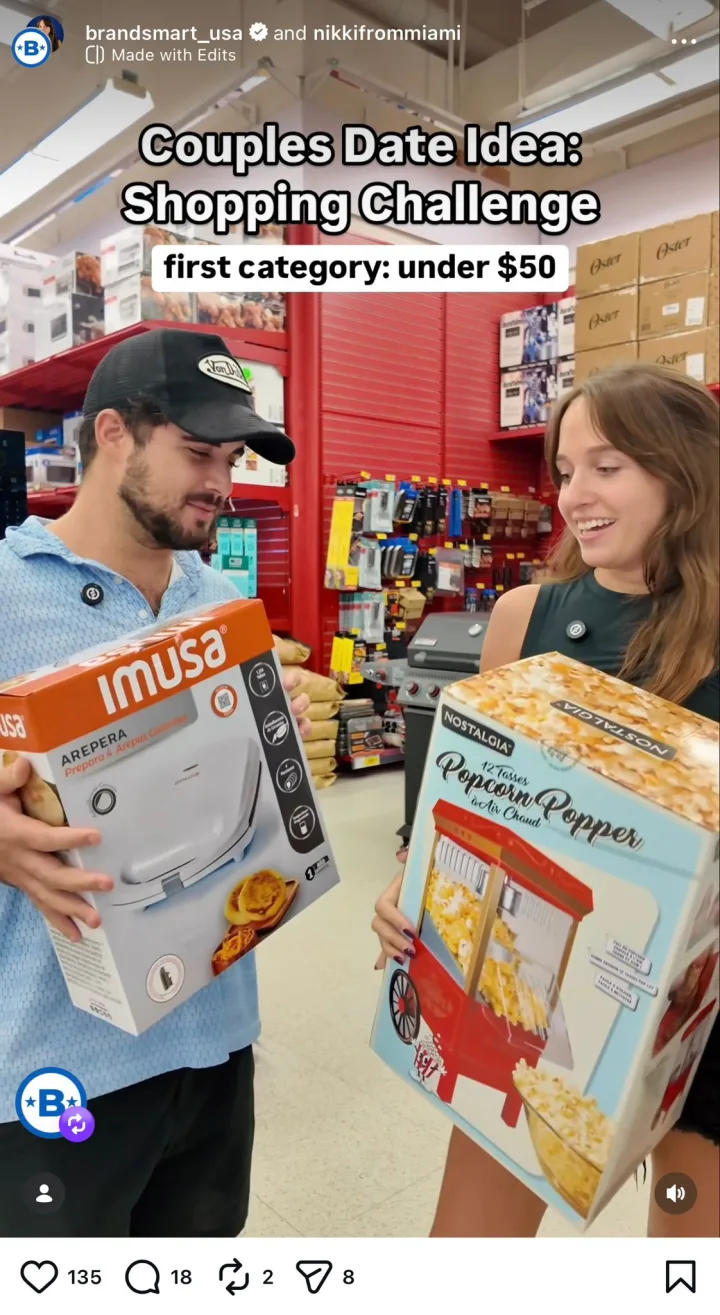
A two-week retail campaign coordinated 34 creators and 45 content pieces, producing 151K accounts reached and 26.9K interactions.
Published ecommerce work combined paid social, Shopify conversion and lifecycle marketing. The reported revenue growth belongs to that broader scope, not Amazon Ads.
We do not relabel social, website or ecommerce results as marketplace outcomes. Amazon reporting begins with the products, campaigns and data sources actually in scope.
Results vary by category, product, margin, competition, inventory, retail readiness and market conditions. Case-study outcomes are historical examples, not guarantees. The Amazon Ads proposal will identify which measurement sources are available and what can be stated responsibly.
A practical cadence keeps strategy, execution and reporting connected. The sequence adapts to account maturity, but ownership stays visible.
Review account history, catalog, economics, inventory, tracking, creative, Store structure and current constraints. The output separates urgent fixes from opportunities that need more data.
Define product roles, break-even assumptions, target ranges, budget boundaries and measurement definitions. Stakeholders agree on what profitable growth means before scaling.
Restructure or launch campaigns with clear jobs, query paths, product targets, negatives, naming and budget ownership. Existing winners remain protected during transition.
Monitor search terms, placements, bids, spend, availability, promotions and exceptions. Changes follow documented evidence instead of a calendar of random optimizations.
Report observations, decisions and next actions across media and business metrics. The next cycle uses what shoppers, products and inventory revealed.
Some teams need daily campaign management. Others need strategy, cleanup, creative direction or DSP support around an internal operator. The proposal names the handoffs.
The recurring scope can cover the Sponsored Ads operating layer and the information required to make those decisions responsibly.
Additions depend on eligibility, asset readiness, data access and business need. They are included only when they strengthen the operating system.
Direct answers about scope, budget, ACoS, listings, formats, reporting and performance expectations.
Scope can include account and catalog audits, Sponsored Products, Sponsored Brands, Sponsored Display, Amazon DSP planning, keyword and ASIN research, campaign structure, bidding, budgets, negative targeting, creative briefs, listing recommendations, inventory-aware pacing and reporting. The proposal defines which responsibilities Heyday owns and which inputs your team provides.
Budget depends on category competition, catalog size, sales velocity, margin, inventory, launch timing and the amount of data required to make decisions. We model the account from unit economics and available demand instead of forcing every seller into one minimum spend formula.
A good ACoS is one the product can support. The target changes with gross margin, fees, fulfillment, returns, promotions, repeat purchase behavior and growth goals. We calculate a break-even range for each product group and read ACoS together with TACoS and contribution margin.
Yes, when each format has a clear role and the account is eligible. Sponsored Products usually capture product-level demand. Sponsored Brands can build branded discovery and Store journeys. Sponsored Display and DSP can support audience, retargeting, video and reach objectives with different inventory and measurement requirements.
Advertising can expose a listing to more shoppers, but it cannot permanently repair weak positioning, poor images, unclear copy, low review confidence, price mismatch or unavailable inventory. We identify retail-readiness problems and recommend listing or creative changes before additional media hides the real constraint.
Reporting connects spend, attributed sales, ACoS, TACoS, conversion rate, search terms, placement, new-to-brand indicators when available, inventory risk and product-level contribution. We separate observations from decisions so your team knows what changed, why it changed and what happens next.
No. Demand, competition, pricing, reviews, inventory, Buy Box eligibility, platform systems and product quality affect results. Heyday can build disciplined campaigns, improve decisions from evidence and report transparently, but no agency controls a fixed sales, ranking or profitability outcome.
Share the account stage, marketplace, product range, monthly spend, margin constraints, inventory position and objective. We will recommend a focused scope instead of a preset package.
No automated account changes and no generic budget promise. The recommendation follows your products and business constraints.

Heydi
Heyday Marketing · Online
AI assistant. Responses can be inaccurate. Do not share passwords, payment, health, legal, or other sensitive information. Messages are processed by OpenAI. Privacy details.
Accessibility