Restaurant Marketing Miami: How Miami’s Hottest Restaurants Fill Tables on a Tuesday Night
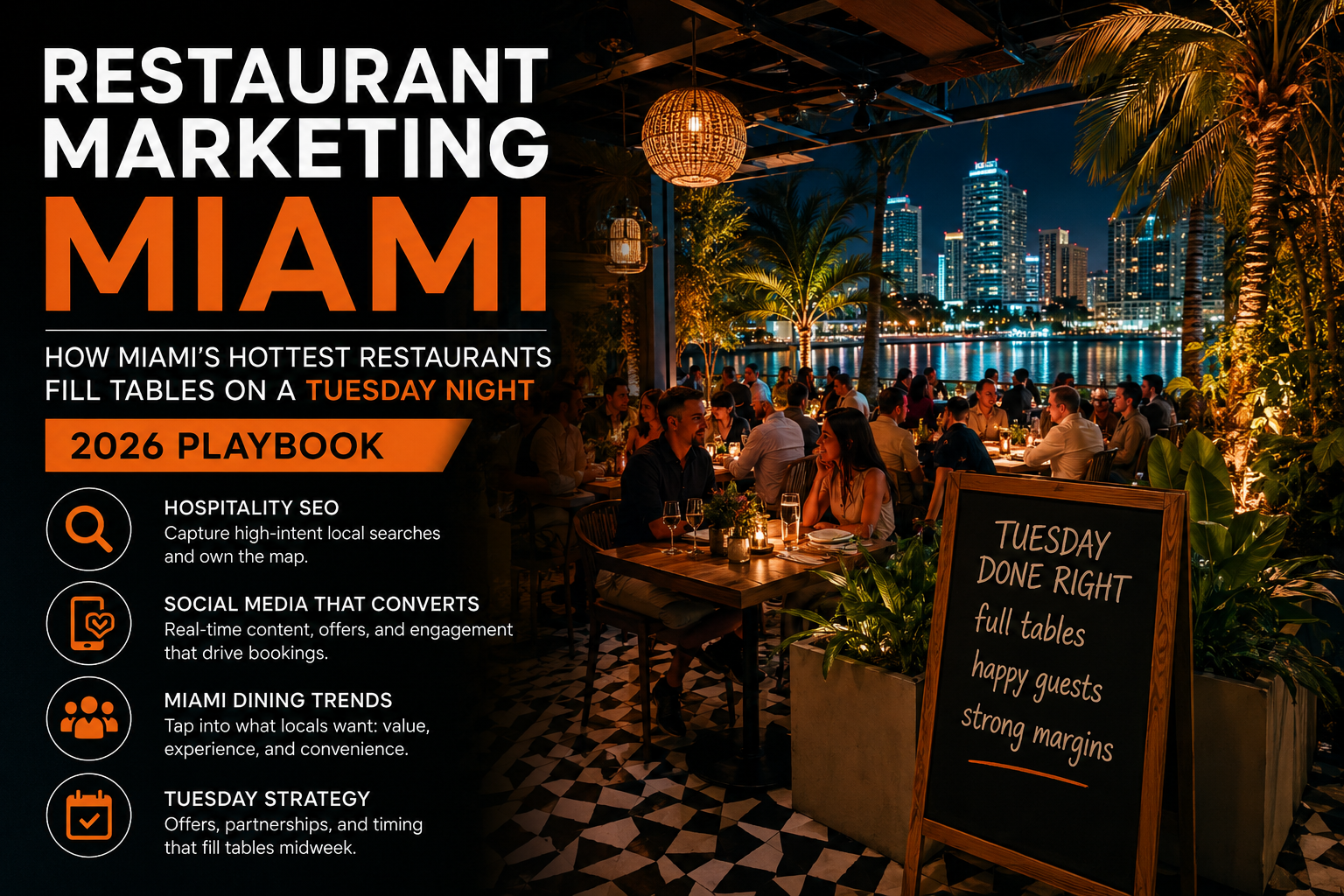
For many restaurants, Tuesday is one of the toughest nights of the week.
The weekend crowds have disappeared, tourists are exploring other parts of the city, and many locals are settling back into their work routines. Yet operating costs remain exactly the same. Staff are scheduled, ingredients have been ordered, and overheads don't pause simply because fewer guests walk through the door.
In a competitive market like Miami, consistently filling tables on quieter nights can have a significant impact on monthly revenue.
The good news is that the restaurants succeeding on Tuesdays aren't necessarily offering the biggest discounts or spending the most on advertising. Instead, they're following a restaurant marketing strategy that combines local visibility, timely promotions, customer loyalty, and memorable dining experiences.
From our experience working with hospitality businesses, we've found that successful midweek marketing isn't about trying everything at once. It's about understanding how local diners make decisions and showing up with the right message at exactly the right time.
In this guide, we'll explore practical strategies restaurants across Miami can use to increase Tuesday bookings, attract more local customers, and turn quieter evenings into consistent revenue opportunities.
Why Tuesday Nights Are Different in Miami
Miami's restaurant scene has a rhythm of its own.
Weekends are fuelled by tourism, nightlife, sporting events, and visitors exploring neighbourhoods like South Beach, Wynwood, and Brickell. Tuesdays, however, rely much more heavily on local residents, office workers, and people looking for a convenient place to meet friends or unwind after work.
That means restaurants need to market differently.
Rather than appealing to tourists planning their weekend, Tuesday promotions should focus on the people who are already nearby and making spontaneous dining decisions.
In our experience, Tuesday diners usually fall into three groups:
- Local residents looking for a reliable neighbourhood favourite.
- Office workers searching for an easy after-work dinner or happy hour.
- Couples and small groups looking for a quieter dining experience than the busy weekend rush.
Understanding these audiences helps restaurants create offers that feel relevant instead of relying on blanket discounts.
Research also supports this shift in behaviour. According to Toast's Restaurant Trends Report, promotions and special offers continue to influence where diners choose to eat, particularly during quieter periods of the week. However, value doesn't always mean lower prices. Many guests are equally motivated by limited-time menus, chef specials, live entertainment, or exclusive experiences that make an evening out feel worthwhile.
Give Guests a Reason to Visit on a Tuesday
One of the biggest mistakes restaurants make is treating Tuesday like any other day.
If your Tuesday experience looks exactly the same as Monday or Wednesday, diners have very little reason to choose that night over another.
Successful restaurants create a clear reason to visit.
That doesn't always mean offering discounts. In fact, excessive discounting can reduce perceived value and train customers to wait for promotions.
Instead, focus on experiences that feel exclusive.
Popular ideas include:
- Chef's tasting menus available only on Tuesdays.
- Wine or cocktail pairing evenings.
- Live acoustic music or local entertainment.
- Seasonal dishes available for one night each week.
- Neighbourhood appreciation nights.
- Prix fixe menus that increase perceived value without reducing margins.
We've seen restaurants achieve stronger long-term results by creating memorable weekly experiences rather than relying solely on lower prices.
When guests know they'll find something unique every Tuesday, they have a reason to return regularly.
Capture Diners Searching "Near Me"
Many Tuesday dining decisions happen only hours before dinner.
Someone finishes work in Brickell, leaves the office in Coral Gables, or meets friends in Coconut Grove and searches for somewhere nearby to eat.
If your restaurant doesn't appear during that search, you've already lost potential customers.
Local search visibility is one of the most effective ways to attract diners with immediate intent.
Rather than searching for broad phrases like "best restaurant in Miami," many people now search for terms such as:
- Italian restaurant near me
- Happy hour in Brickell
- Best tacos in Wynwood
- Outdoor dining Coral Gables
- Tuesday dinner specials Miami
Appearing in these searches often comes down to maintaining a strong local online presence.
Hospitality SEO Checklist: Practical Improvements You Can Make This Week
Improving local search visibility doesn't always require major changes. Small updates can make it easier for nearby diners to discover your restaurant when they're deciding where to eat.
Start with these practical steps:
Keep your Google Business Profile updated
Don't just verify your profile and forget about it. Review your business information every month to ensure your opening hours, phone number, reservation link, and menu are accurate. If you're running a Tuesday special or live event, update your profile with a Google Post so nearby diners can see it while searching.
Encourage Google Reviews
Instead of waiting for reviews, encourage happy customers to leave feedback after their meal. Restaurants with recent positive reviews often build more trust and improve their visibility in local search results. Responding to every review, positive or negative, also shows potential diners that you value customer feedback.
Include neighbourhood-specific content
Rather than mentioning only "Miami," naturally reference neighbourhoods where your restaurant attracts customers, such as Brickell, Wynwood, Coral Gables, Coconut Grove, or Downtown Miami. This helps search engines better understand your local relevance.
Make reservations effortless
Ensure your reservation button is clearly visible on both desktop and mobile. If customers have to search for the booking link or fill out lengthy forms, they're more likely to book elsewhere.
One thing we've consistently observed is that restaurants investing time in these fundamentals often outperform competitors with larger advertising budgets simply because they're easier to find when diners are actively searching.
Social Media That Actually Fills Tables on a Tuesday
For restaurants, social media isn't just about beautiful food photography, it's about influencing dining decisions that happen within the next few hours.
Many Tuesday reservations are spontaneous. Someone finishes work, checks Instagram or TikTok while commuting home, and decides where to eat based on what they see.
That's why the most effective restaurant content creates urgency rather than simply showcasing the menu.
From our experience, restaurants that consistently fill tables on quieter evenings use social media to answer three questions diners naturally ask:
- Does the food look worth trying?
- Is the restaurant busy enough to have a good atmosphere?
- Can I book a table easily?
Short videos often perform particularly well because they quickly capture the energy of the restaurant. A chef preparing a signature dish, guests enjoying live music, or a packed dining room during happy hour all provide social proof that encourages people to visit.
Every post should also make the next step simple. Whether that's a reservation link, online booking button, or a phone number, reducing friction helps turn interest into bookings.
What Miami's Busiest Restaurants Do Differently on Tuesdays
Successful restaurants don't wait until Tuesday afternoon to think about Tuesday marketing.
Instead, they build anticipation throughout the week.
One approach we've seen work particularly well is creating recurring weekly experiences that guests begin to associate with Tuesday evenings.
Examples include:
- Taco Tuesdays with exclusive chef specials.
- Live jazz or acoustic music.
- Wine and food pairing events.
- Seasonal tasting menus.
- Local artist showcases.
- Trivia or themed dining nights.
These experiences give customers something to remember and something to share with friends.
The objective isn't simply filling seats once, it's creating a weekly habit that encourages repeat visits.
Promote Value Instead of Discounts
Offering discounts can increase foot traffic, but relying on them every week often creates the wrong expectations.
Guests may begin delaying visits until promotions become available, making it harder to maintain healthy profit margins.
Instead, successful restaurants focus on increasing perceived value.
Rather than advertising "20% off dinner," consider offers such as:
- Complimentary dessert with selected entrées.
- Chef's specials available only on Tuesdays.
- Prix fixe menus featuring seasonal ingredients.
- Exclusive cocktail pairings.
- Early evening tasting experiences.
These promotions feel premium while protecting the restaurant's average spend per guest.
In our experience, diners are often motivated by unique experiences rather than the lowest price.
Email and SMS Timing That Actually Works
Timing can be just as important as the offer itself.
Sending a promotional email at the wrong time means many customers won't see it until they've already made dinner plans.
Restaurants that consistently generate Tuesday bookings usually communicate before diners begin making their evening decisions.
A practical schedule looks like this:
Monday Afternoon
Send an email introducing your Tuesday experience rather than simply advertising a discount. Include mouth-watering photos, a clear reservation button, and mention if availability is limited. Giving diners advance notice increases the likelihood they'll plan a midweek visit.
Tuesday Morning
Share a reminder through email and social media featuring your chef's special, live music, or happy hour. Focus on what makes Tuesday unique instead of repeating your regular menu.
Tuesday (3–5 PM)
A short SMS works best when people are deciding where to eat after work.
Example:
Tonight only: Join us for our Tuesday seafood tasting menu from 6 PM. Reserve your table now before bookings close.
Messages like this create urgency without relying on discounts.
This creates excitement without reducing the perceived value of your restaurant.
Build Relationships Within Your Local Community
Not every Tuesday booking has to come directly from online marketing.
Many successful Miami restaurants develop strong relationships with nearby businesses and organisations that regularly send new customers their way.
For example:
- Partner with local gyms to offer members exclusive dining experiences.
- Work with nearby hotels to recommend your restaurant to guests.
- Create neighbourhood offers for office workers in Brickell or Downtown Miami.
- Collaborate with local event organisers before concerts, sporting events, or community festivals.
These partnerships create a steady stream of local diners who may become repeat customers long after the initial visit.
Restaurants that combine community involvement with targeted local advertising campaigns often stay top of mind for nearby diners while reinforcing their presence in the local market.
Turn First-Time Tuesday Guests into Regular Customers
Filling tables on one Tuesday is valuable.
Convincing those guests to return is even more valuable.
One of the biggest opportunities many restaurants overlook is staying connected with customers after their visit.
Simple follow-up strategies can make a significant difference:
- Invite guests to join your loyalty programme.
- Encourage them to leave a Google review.
- Collect email addresses through online reservations.
- Send personalised birthday offers.
- Reward repeat visits with exclusive experiences rather than discounts.
We've found that restaurants focusing on guest retention often see stronger long-term growth than those concentrating only on attracting new customers each week.
Every returning guest reduces the effort required to fill future Tuesday evenings.
Common Mistakes That Keep Restaurants Empty on Tuesday Nights
Even the best restaurants can struggle on quieter nights if their marketing isn't aligned with how people actually choose where to eat.
From our experience, these are some of the most common mistakes that prevent restaurants from filling tables on Tuesdays, and the practical changes that make a real difference.
1. Promoting Tuesday Specials Too Late
Many restaurants don't begin promoting Tuesday until the afternoon, when many diners have already made plans.
Instead, start building anticipation on Monday. Use email, social media, and your Google Business Profile to let customers know what's happening before they begin deciding where to eat.
Giving people time to plan often leads to more reservations than relying solely on last-minute promotions.
2. Relying Too Heavily on Discounts
Discounts may increase bookings in the short term, but they can also encourage customers to wait for deals instead of visiting regularly.
Restaurants that consistently perform well focus on creating value rather than reducing prices.
Exclusive menus, live entertainment, chef's specials, or themed evenings often create stronger demand while protecting profit margins.
3. Ignoring Your Google Business Profile
For many diners, your Google Business Profile is the first interaction they'll have with your restaurant.
Outdated opening hours, old photos, missing menus, or unanswered reviews can quickly discourage potential guests.
Keeping your profile updated with accurate opening hours, recent photos, current menus, and timely Google Posts helps customers find the information they need and builds confidence before they book a table.
4. Making Reservations More Difficult Than They Need to Be
Many diners decide where to eat just a few hours before dinner. If your booking page loads slowly, isn't mobile-friendly, or requires too many steps, they'll often move on to another restaurant. Making reservations quick and frictionless can improve conversions without increasing your marketing budget.
5. Not Following Up After a Guest's Visit
Many restaurants invest heavily in attracting new customers but never reconnect with guests after their meal. Invite guests to join your loyalty programme, send a thank-you email after their visit, share birthday offers, or remind them about next week's Tuesday event. These simple follow-ups encourage repeat visits without increasing advertising spend.
6. Not Updating Online Menus
Customers often check your menu before booking. Outdated prices or unavailable dishes create frustration and reduce trust. Keep your website, Google Business Profile, and reservation platforms updated whenever your menu changes.
7. Treating Every Tuesday the Same
Restaurants that consistently fill tables create a weekly reason to visit, whether it's live music, a chef's tasting menu, or a themed dining night. Without something unique, diners have little incentive to choose Tuesday over another evening.
8. Posting Food Photos Without Creating Urgency
Beautiful food photography can attract attention, but it doesn't always drive bookings. Restaurants that fill tables on quieter nights use social media to highlight what's happening today, whether it's a chef's special, live music, or a limited-time menu. Pairing engaging visuals with a clear call-to-action, such as "Reserve your table tonight," makes it easier for diners to act immediately.
Conclusion: Building Consistent Tuesday Traffic Starts with Better Experiences
Filling tables on a Tuesday night isn't about finding a single marketing trick or running bigger discounts.
It's about understanding how local diners make decisions and giving them a compelling reason to choose your restaurant.
From our experience, the restaurants that consistently perform well combine strong local visibility with memorable dining experiences, timely communication, and exceptional customer service. They don't rely on one-off promotions, they build habits that encourage guests to return week after week.
In a city as competitive as Miami, every restaurant is competing for attention. The businesses that stand out are the ones that make it easy to discover them, simple to book a table, and worthwhile for guests to come back again.
A successful Restaurant Marketing Miami strategy isn't just about filling empty tables on a Tuesday, it's about building lasting relationships with customers that support your restaurant throughout the entire week.
If you're looking to attract more local diners and create a sustainable marketing strategy for your restaurant, our team can help.
Frequently Asked Questions
How can restaurants increase Tuesday night reservations in Miami?
Start promoting your Tuesday offers before the day arrives. Combining an updated Google Business Profile, active social media, email reminders, and a unique Tuesday experience, such as live music or a chef's special, can encourage local diners to choose your restaurant over nearby competitors.
Are discounts the best way to attract more diners on Tuesdays?
Not necessarily. While discounts may generate short-term interest, many restaurants achieve better long-term results by offering added value instead. Prix fixe menus, exclusive dishes, live entertainment, or themed dining experiences create stronger reasons to visit without reducing profitability.
Why is Google Business Profile important for restaurants?
Many diners search for restaurants only a few hours before eating. An updated Google Business Profile with accurate opening hours, menus, recent photos, and positive reviews increases the chances of appearing in local search results and helps customers make quicker decisions.
What type of social media content works best for restaurants?
Short, authentic videos usually perform better than highly polished promotional posts. Showing freshly prepared dishes, a lively dining room, customer reactions, or behind-the-scenes moments helps diners imagine the experience and encourages them to book a table.
When should restaurants send promotional emails or SMS messages?
Email campaigns often perform best when sent on Monday afternoon or Tuesday morning, giving customers time to plan. SMS messages are generally most effective between 3:00 PM and 5:00 PM, when many people are deciding where to eat after work.
How can restaurants encourage repeat Tuesday visits?
Creating memorable weekly experiences is one of the most effective strategies. Loyalty programmes, seasonal menus, personalised offers, and consistently excellent service give guests a reason to return and help turn first-time diners into regular customers.
